
Chemotherapy — sometimes simply called “Chemo”— is the use of drugs to kill or slow the growth of cancer cells. It is one of the most common and effective treatments for cancer and can be used alone or in combination with surgery, radiation therapy, or other medications. Because chemotherapy drugs travel through the bloodstream to reach cancer cells throughout the body, they are particularly useful when cancer has spread or is at risk of spreading. Being well-informed about what chemotherapy involves can help you and your family prepare and make decisions that are right for you.
Chemotherapy
Key Index
1. What is Chemotherapy
----- Page 1
- How does it work?
- How is it used?
- Why have chemotherapy?
- How is it given and does it hurt?
2. Preparing for Chemotherapy
----- Page 2
3. Treatment
----- Page 3
- How does one know if the treatment is working?
- Making treatment decisions
- Why does chemotherapy cause side effects?
- What to expect when having chemotherapy?
4. Side Effects and Managing Them
----- Page 4
- Managing fatigue
- Managing appetite loss
- Managing nausea
- Managing diarrhoea
- Managing constipation
- Watery eyes
- Hair loss
- Mouth sores
- Skin and Nail changes
- Thinking and Memory changes
How Chemotherapy Affects the Blood
----- Page 9
- Anaemia
- Infections
- Taking care of infections during chemotherapy
- When to seek medical help
- Bleeding problems
- When you have a low platelet count
Nerve and Muscle Effects
----- Page 12
- Tips for managing numb hands or feet
- Changes in hearing
Sex & Fertility
----- Page 12
- Changes in sexuality (the word "fertility" is crossed out and replaced with "sexuality")
- Using contraception
- Changes in fertility
Effects
----- Page 13
- Effects of chemotherapy on women
- Effects of chemotherapy on men
FAQs about Chemotherapy
How does chemotherapy work?
Chemotherapy drugs damage cells that are dividing rapidly. Most chemotherapy drugs enter the bloodstream and travel throughout the body to target cancer cells in organs and tissues. This is called systemic treatment. In some cases, chemotherapy is delivered directly to the site of the cancer (local chemotherapy). You may receive a single drug or a combination of drugs, depending on the type of cancer you have.
Why is chemotherapy recommended?
Chemotherapy can be used for different reasons:
- To cure
- To assist other treatments
- To control the cancer
- To relieve symptoms
- To prevent recurrence
How is chemotherapy given and does it hurt?
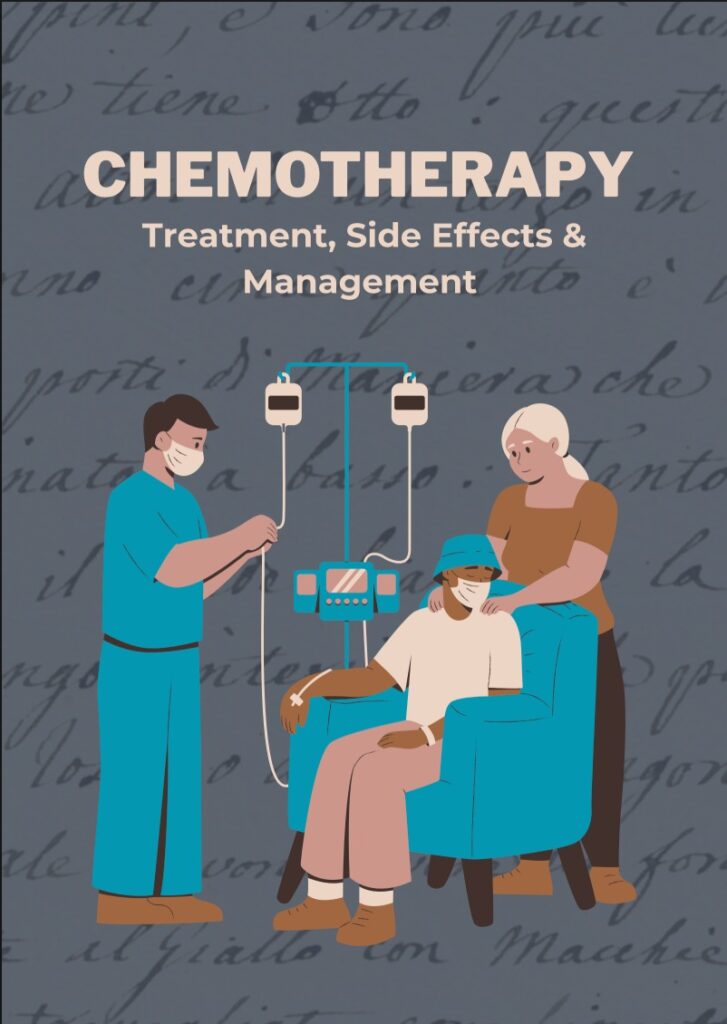
Chemotherapy is most commonly given intravenously (through a drip into a vein), though it can also be given as tablets, injections, or through a portable pump carried at home. You may feel a small needle prick when the drip is inserted, and occasionally a mild coolness or sensation in the arm— but the infusion itself is generally not painful. If you experience burning, stinging, or swelling at the IV site, tell your nurse immediately.
How long does chemotherapy treatment last?
Chemotherapy is given in cycles, with rest periods in between to allow the body to recover. The duration depends on the type of cancer and the drugs being used. A typical course may last four to six months, though it can be shorter or longer. Maintenance or palliative chemotherapy may continue for a longer period. Your treating team will outline the expected schedule at the start of your treatment.
Why does chemotherapy cause side effects?
Chemotherapy targets rapidly dividing cells — and while cancer cells divide quickly, so do some healthy cells, including those in the blood, mouth, digestive system, and hair follicles. Side effects occur when chemotherapy damages these normal cells. Importantly, healthy cells can recover, which is why most side effects are temporary and gradually improve once treatment ends.
What are the common side effects of chemotherapy?
Side effects vary depending on the drugs used and the individual. Common ones include:
- Fatigue
- Nausea and vomiting
- Hair loss
- Mouth sores
- Appetite changes
- Constipation or diarrhoea
- Increased risk of infection
- Anaemia
- Peripheral neuropathy
- “Chemo brain”
Always report side effects to your care team so they can be managed promptly.
How can I prepare for chemotherapy?
Every person’s experience with chemotherapy is different, but some practical steps can help:
- Pack a "chemo bag" with warm clothing, healthy snacks, lip balm, and something to keep you occupied.
- Eat a nourishing meal before your session and drink plenty of water.
- Try to get a good night's sleep before each appointment.
- Arrange support at home, particularly if you have young children.
- Visit your dentist before treatment begins, as dental issues can become more serious during chemotherapy.
- Discuss all current medications — including supplements and alternative remedies — with your treatment team, as some can interfere with chemotherapy.
- Talk to your employer about your treatment schedule and its likely impact on work.
- Speak to a counsellor or use mental health support services available at your treatment centre.
How will I know if the treatment is working?
Experiencing side effects or the absence of side effects does not necessarily mean the treatment is working. Treatment response is assessed through physical examinations by your oncologist and tests such as blood work, scans, and imaging.
How does chemotherapy affect the blood?
Blood cells are made in the bone marrow and divide rapidly, making them vulnerable to chemotherapy.
Red blood cells — carry oxygen; a drop in these can cause anaemia
White blood cells — fight infection; a low count (neutropenia) increases your risk of serious infection
Platelets — help blood to clot; low levels (thrombocytopenia) can cause easy bruising or bleeding
Blood tests are carried out before each chemotherapy cycle to check your counts. If they are too low, treatment may be delayed until they recover.
When should I seek urgent medical help during chemotherapy?
Contact your care team immediately or go to the nearest hospital if you experience:
- Temperature above 38°C (fever)
- Chills or shivering
- Excessive sweating, especially at night
- Burning sensation when urinating
- Continuous vomiting
- Severe cough or shortness of breath
- Unusual bleeding or bruising
- Dizziness or rapid heartbeat
- Severe diarrhea or constipation
During chemotherapy, even a minor infection can become serious very quickly. Do not hesitate to seek help.
Will chemotherapy affect my fertility?
Chemotherapy can affect fertility in both men and women, though not always permanently. For women, it may cause irregular or absent periods, or in some cases, early menopause. For men, it may temporarily or permanently reduce sperm count.
How should I make decisions about my treatment?
Take the time you need. After a diagnosis, it may feel as if everything is moving very fast— but it is important to discuss all available options with your treating team before making a decision. Ask about your disease, the treatment plan, possible side effects, and costs. Write down what you are told and do not hesitate to ask for clarification. A second opinion is always an option and can help you feel more confident in your treatment decisions.